When water enters your home unexpectedly, knowing what to do next can make a major difference in limiting damage. Understanding the water damage repair process helps homeowners know what to expect, from the initial inspection and water removal to drying, cleaning, repairs, and final restoration. Acting quickly can also help reduce the risk of structural damage, mould growth, and more extensive repairs.
Water damage can result from many situations, including burst pipes, plumbing leaks, appliance failures, overflowing fixtures, roof leaks, flooding, or sewage backups. Regardless of the source, professional restoration involves more than simply removing visible water. The affected areas must be properly dried, cleaned, assessed, and restored to help prevent problems from returning.
What Is Water Damage Restoration?
Water damage restoration is the process of returning a property to a safe and usable condition after water has caused damage. It typically includes water extraction, drying, cleaning, sanitising, damage assessment, and repairs or replacement of affected materials.
Professional water damage services can address both immediate water removal and the subsequent restoration work needed to return affected areas to a usable condition.
The restoration process depends on the amount of water involved, how long the materials have been exposed, where the water has spread, and whether the water is contaminated.
Professional restoration focuses on both the visible damage and the moisture that may be hidden behind walls, under flooring, inside cabinets, or beneath other materials. Removing surface water alone does not necessarily solve the problem.
Why Quick Action Matters After Water Damage
Water can continue moving through porous building materials long after the original leak has stopped. Flooring, drywall, insulation, wood, cabinets, and other materials can absorb moisture, potentially leading to deterioration and microbial growth.
The longer materials remain wet, the greater the possibility of secondary damage. Moisture can also spread into areas that initially appear unaffected.
Taking action quickly allows restoration professionals to identify the source, remove standing water, begin the drying process, and determine which materials can be restored and which may require replacement.
For more guidance on responding to water emergencies, homeowners can review these water damage steps to understand what actions may be appropriate before professional help arrives.
Step 1: Emergency Assessment and Inspection
The restoration process generally begins with an inspection of the affected property. Professionals assess where the water came from, how far it has travelled, and which areas or materials have been affected.
The inspection may include visible checks of flooring, walls, ceilings, cabinets, plumbing areas, and other potentially affected spaces. Moisture detection equipment can also help identify damp materials that are not visibly wet.
This assessment is important because the visible area of damage may not represent the full extent of the problem. Water can travel underneath flooring or through wall cavities, making a thorough inspection an important first step.
Step 2: Identify and Stop the Water Source
Before cleanup can proceed effectively, the source of the water needs to be addressed whenever possible.
For example, the problem could involve a leaking pipe, damaged appliance, overflowing plumbing fixture, roof issue, or another source of unwanted water. In some situations, a plumber or other specialist may be needed to complete the necessary repair.
Stopping the source prevents additional water from entering the property while restoration work is underway.
If the source is not addressed, even a thorough cleanup may only provide a temporary solution because new moisture can continue creating problems. Homeowners can also learn how to locate their water shutoff before a plumbing emergency occurs.
Step 3: Remove Standing Water
Once the property has been assessed and the source controlled, standing water can be removed.
Professional restoration teams may use specialised extraction equipment to remove water from floors, carpets, and other affected areas. The equipment used depends on the type and amount of water present.
Effective extraction is an important part of the water damage cleanup process because removing excess water allows the drying stage to begin sooner.
Simply mopping or vacuuming visible water may not be enough when moisture has penetrated flooring, walls, or other materials.
For properties affected by significant flooding, professional flood cleanup may involve specialised extraction and drying procedures.
Step 4: Begin Professional Drying
After standing water has been removed, the affected areas need to be thoroughly dried.
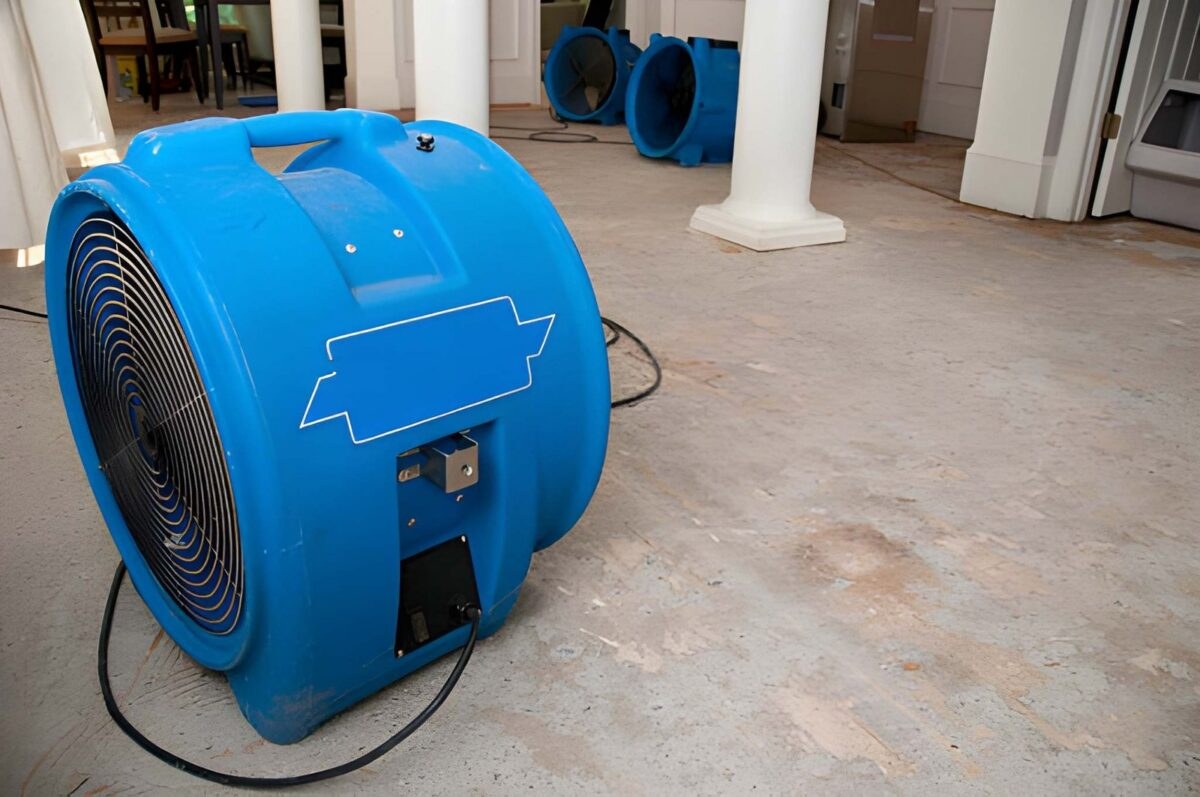
Industrial air movers, dehumidifiers, and other drying equipment can help remove moisture from the air and affected materials. Professionals may monitor moisture levels during this stage to determine whether materials are drying properly.
Drying is one of the most important parts of the restoration process because materials can appear dry on the surface while retaining moisture underneath.
The length of the drying process depends on several factors, including the extent of the water intrusion, materials involved, ventilation, humidity, and the amount of moisture present.
Step 5: Check for Hidden Moisture
Water does not always remain where it is first noticed. It can move behind walls, underneath flooring, beneath cabinets, and into other concealed areas.
For this reason, professional restoration may include additional moisture checks throughout the affected space.
Finding hidden moisture early can help prevent ongoing damage. If damp materials are overlooked, they may continue deteriorating even after the visible water has disappeared.
This is one reason professional restoration is more comprehensive than simply completing basic water cleanup.
Homeowners who notice unexplained dampness or staining can also review these hidden leak signs for common indicators of concealed water problems.
Step 6: Clean and Sanitise Affected Areas
Once excess moisture has been removed and drying is underway or complete, affected areas may need to be cleaned and sanitised.
Cleaning requirements depend on the type of water involved. Water from a clean supply line presents different concerns from water contaminated by sewage, flooding, or other sources.
Professionals can determine appropriate cleaning and sanitising procedures based on the condition of the property.
Cleaning can also address dirt, debris, odours, and contaminants that may have been introduced with the water.
Step 7: Evaluate Damaged Materials
Not every material affected by water needs to be replaced. Some materials may be cleaned and dried successfully, while others may be too damaged, contaminated, or deteriorated to restore.
Professionals evaluate materials such as drywall, insulation, flooring, trim, cabinets, and other components based on their condition.
The goal is to restore what can safely be restored while identifying materials that require removal or replacement.
This evaluation can help prevent unnecessary replacement while ensuring seriously damaged materials are not left in place.
Step 8: Address Mould and Microbial Concerns
Moisture that remains in a property can create conditions that support mould growth. This is especially important when water damage has not been discovered immediately.
If mould is identified, the appropriate mold remediation process may need to be completed separately or alongside the restoration work.
Addressing the moisture problem is essential because cleaning visible mould without correcting the underlying moisture issue may not prevent it from returning.
Homeowners dealing with moisture after a water event can also learn about mold growth timing to better understand why prompt drying matters.
Professional restoration teams can assess affected areas and determine whether additional mould-related work is necessary.
Step 9: Complete Necessary Repairs
After water removal, drying, and cleaning are complete, the property may still need repairs.
The type of repair depends on the damage. This could include replacing damaged drywall, flooring, insulation, trim, cabinetry, or other building materials.
In some cases, repairs may be relatively limited. More extensive water intrusion can require reconstruction of portions of a room or other affected areas.
This stage is where water damage repair becomes particularly important because restoring the property involves more than removing water. Damaged building components must be safely repaired or replaced so the space can return to normal use.
Step 10: Restore the Property
The final restoration stage focuses on bringing the affected area back to its pre-damage condition as closely as possible.
Depending on the situation, restoration may involve painting, replacing flooring, reinstalling fixtures, repairing walls, or completing other finishing work.
A complete restoration should address the consequences of the water damage rather than stopping once the property looks dry.
The objective is to leave the affected area clean, dry, safe, and properly restored.
How Water Damage Restoration Differs From Water Damage Repair
Water damage restoration and repair are closely connected, but they are not always the same thing.
Restoration generally focuses on removing water, drying the property, cleaning affected areas, and preventing secondary damage. Repair focuses more specifically on fixing or replacing materials that were damaged by the water.
For example, extracting water from a room and drying the flooring are restoration activities. Replacing damaged drywall or repairing a damaged section of flooring may be considered repair work.
A complete restoration project may involve both.
What Factors Affect the Restoration Process?
Every water damage situation is different. The restoration process can vary based on:
- The source of the water
- The amount of water present
- How long the property has been exposed
- The areas affected
- The materials involved
- Whether moisture has spread into concealed spaces
- Whether contamination is present
- The extent of structural damage
- The amount of drying required
- The repairs or reconstruction needed afterward
These factors help determine the equipment, labour, cleaning methods, and restoration work required.
What Happens If Water Damage Is Ignored?
Ignoring water damage can allow a relatively manageable problem to become more extensive.
Persistent moisture may contribute to damaged flooring, deteriorating drywall, unpleasant odours, mould growth, weakened materials, and other secondary problems. Water can also spread beyond the original area, making the eventual restoration more complicated.
A small leak should therefore not automatically be treated as a minor issue. The visible water may only be part of the problem.
If you notice unexplained moisture, staining, damp materials, or signs of a leak, addressing the issue promptly can help limit further damage. Understanding the water damage dangers can also help homeowners recognise why timely action matters.
Can Homeowners Handle Water Cleanup Themselves?
Minor water spills can often be handled with basic household cleaning methods. However, significant water intrusion is different.
If water has entered walls, flooring, ceilings, insulation, or other building materials, determining how far the moisture has spread can be difficult without appropriate equipment.
Professional help may be especially important when there is extensive standing water, contaminated water, sewage involvement, structural damage, or moisture that has remained in place for an extended period.
Attempting to handle a major water loss without identifying hidden moisture can leave problems behind even when the property appears clean.
When Should You Call a Water Damage Restoration Professional?
Professional assistance should be considered when water damage is extensive, difficult to locate, or potentially contaminated.
You should also seek help when water has affected structural materials, entered hidden spaces, caused significant flooring damage, or remained inside the property for an extended period.
Prompt professional assessment can help determine the appropriate restoration approach and reduce the likelihood of secondary damage.
For additional guidance, homeowners can review these warning signs to understand when professional assistance may be necessary.
How to Prepare for Professional Water Damage Restoration
Before a restoration team arrives, homeowners can take practical steps when it is safe to do so.
If possible, stop the water source and move undamaged belongings away from the affected area. Avoid using electrical equipment in areas where water may have reached electrical outlets or wiring.
It is also helpful to document visible damage with photographs for your records and contact your insurance provider if the situation may involve a covered loss.
Most importantly, avoid putting yourself at risk to remove water or access areas that may be unsafe.
Why Choose Quick Response Restoration?
Quick Response Restoration understands that water damage can disrupt your home and daily routine. Effective restoration requires timely action, careful assessment, proper drying, thorough cleaning, and appropriate repairs.
Our approach focuses on addressing the immediate water problem while also considering hidden moisture and secondary damage. From initial assessment and water extraction through drying, cleanup, repairs, and restoration, the goal is to help return your property to a safe and usable condition.
When water damage occurs, acting quickly can make the restoration process more manageable and help protect your property from additional damage.
Conclusion
Water damage restoration involves much more than removing visible water. A complete process can include inspection, source control, water extraction, professional drying, hidden moisture detection, cleaning, sanitising, material assessment, mould-related work, repairs, and final restoration.
Understanding each stage can help homeowners make informed decisions when dealing with unexpected water damage. Whether the problem comes from a plumbing failure, appliance leak, storm, flooding, or another source, early action is important.
Quick Response Restoration can help guide homeowners through the restoration process and address the damage from cleanup through necessary repairs, helping restore the property as effectively as possible.
If you need assistance with water damage, you can contact us to discuss the situation and determine the appropriate next steps.
Frequently Asked Questions
1. What is the first step in water damage restoration?
The first step is generally assessing the affected property and identifying the source of the water. This helps determine the extent of the damage and what restoration steps are required.
2. How long does the water damage restoration process take?
The timeline depends on the amount of water, affected materials, moisture levels, contamination, drying requirements, and extent of repairs. Some situations can be resolved relatively quickly, while extensive damage may require more time.
3. Is water damage cleanup enough to restore a property?
Not always. Cleanup removes water and debris, but restoration may also require drying, sanitising, material removal, repairs, and reconstruction depending on the severity of the damage.
4. Can water damage cause mould?
Yes. Excess moisture can create conditions that support mould growth, particularly when affected materials remain damp. Prompt water removal and thorough drying can help reduce this risk.
5. When should I contact a professional for water damage?
You should consider professional assistance when there is significant standing water, contaminated water, hidden moisture, structural damage, extensive material damage, or water that has remained inside the property for an extended period.