Home / Water Damage
Nobody plans for a burst pipe. It happens at 2 a.m., or while you’re at work, or the one weekend you’re out of town. A half-inch supply line can put out several gallons a minute, and by the time you find it.
Anyone who’s lived through a January in upstate New York knows the drill. The temperature drops into the single digits, a pipe in an exterior wall or an unheated crawl space freezes solid, and then it cracks.
An ice dam starts with heat leaking into your attic. Snow on the roof melts, runs down to the cold eaves, and refreezes into a ridge of ice. Once that ridge is thick enough, meltwater has nowhere to go but backward.
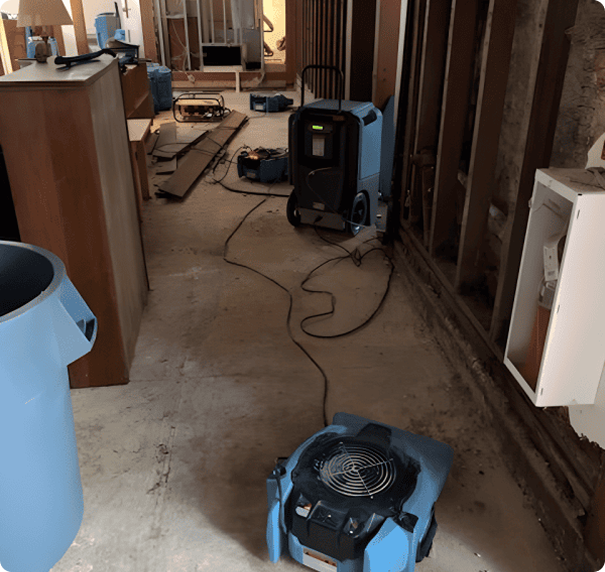
Water damage is a serious problem, leading to mold, mildew growth, and structural damage. Quick Response Restoration is here to help you get back on your feet after a pipe bursts or a storm floods your property.
Sump pumps fail when they’re working hardest: during heavy rain, spring snowmelt, or a power outage in the middle of a storm. A stuck float switch, a burned-out motor, a clogged intake, or no backup power.
Most water heaters last 10 to 15 years, and when they fail, it’s usually the tank rusting through from the inside. There’s rarely a warning. One day there’s a puddle around the base.
A lifted shingle, cracked flashing around a chimney, a failed pipe boot, an ice dam. Roof leaks usually start small and quiet. Water drips onto attic insulation, soaks it, and eventually works through the ceiling drywall.
You need to act quickly when faced with a sewer backup or flood. The longer it takes to remove the water and begin clean-up, the more damage can be done to your property.
A leak doesn’t have to be a flood to do serious damage. A supply line under the sink, a toilet that runs through its seal, a shower pan that failed, a pipe fitting in the wall. Any of them can drip for days or weeks.